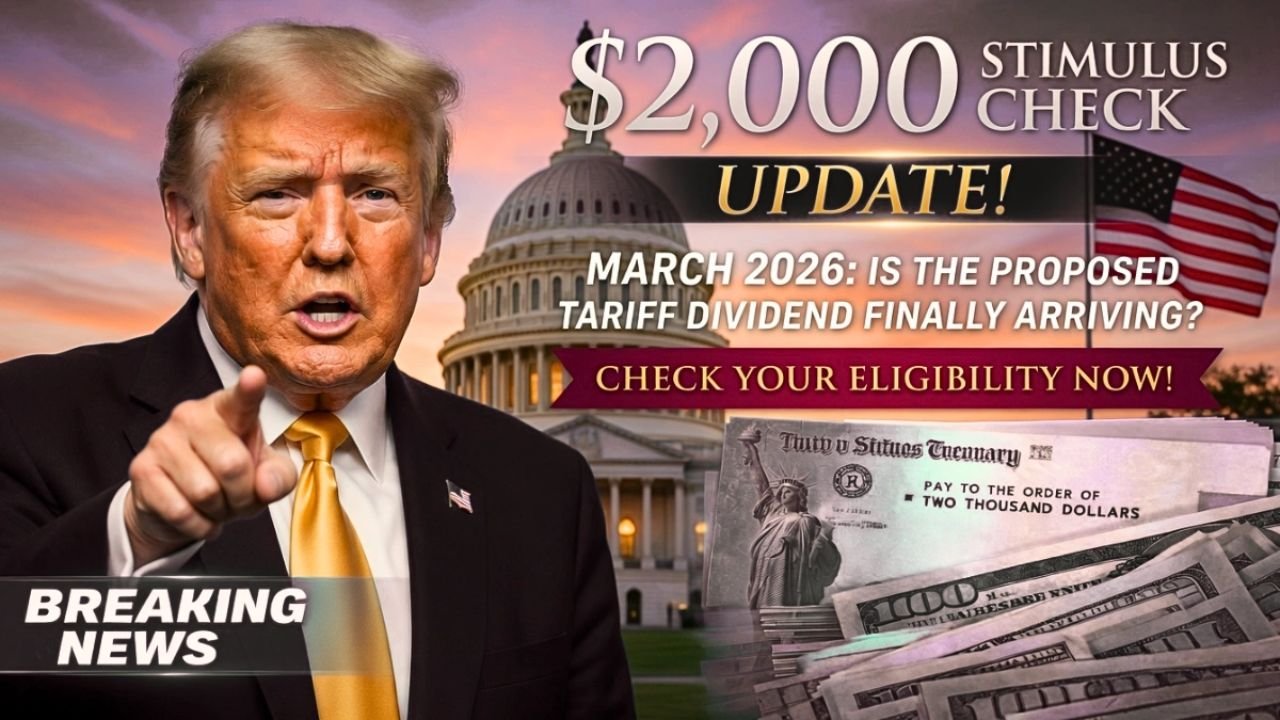
The idea of a $2,000 stimulus payment in March 2026 has generated significant buzz online, fueled by discussions around a proposed tariff dividend. While the concept sounds promising, the reality is far more nuanced. Understanding the proposal, its potential eligibility criteria, and the reasons behind the uncertainty is crucial for anyone hoping to receive this payment.
What Is the $2,000 Tariff Dividend Proposal?
The $2,000 stimulus concept stems from a proposal to redistribute revenue collected from import tariffs directly to U.S. households. The idea is that higher prices caused by tariffs could be offset by returning some of the collected revenue as a direct payment. Proponents argue this could provide relief to middle- and low-income families who have felt the impact of rising costs.

Government data indicates that tariffs have generated billions of dollars in revenue in recent years. Some policymakers have suggested using a portion of this income to fund direct payments, similar in spirit to pandemic-era stimulus checks. However, it is essential to note that this is still a discussion, not a legally approved program.
Is the $2,000 Payment Confirmed?
As of March 2026, no official stimulus payment has been authorized. The Internal Revenue Service (IRS) has not issued any announcements regarding a new $2,000 check, and Congress has not passed legislation to create such a program.
Reports confirm that no new federal stimulus checks are scheduled. The last officially issued payments were part of pandemic relief efforts several years ago, meaning any talk of a March 2026 payment is purely speculative at this stage.
Who Could Qualify If Approved?

If a tariff dividend were to be approved, eligibility would likely resemble past relief programs, focusing on working and middle-income households. Discussions suggest that families below certain income thresholds could qualify, while higher-income earners might be excluded.
| Category | Expected Criteria |
|---|---|
| Income Level | Low to middle-income households |
| Tax Filing | Must have filed recent federal tax returns |
| Family Status | Families may receive higher payments based on household size |
| Residency | U.S. citizens or eligible residents |
It is important to emphasize that these criteria are based on preliminary proposals and historical precedent, not confirmed rules.
Why the Tariff Dividend Faces Delays
Several factors contribute to the uncertainty surrounding the $2,000 payment:
- Legislative Approval – Congress must pass a law to authorize the program. Until that happens, any promise of payments remains hypothetical.
- Legal Challenges – Court rulings affecting tariff collection and distribution could delay or block the program.
- Funding Limitations – While tariffs generate significant revenue, it may not be sufficient to fund large, one-time payments to millions of households without impacting other federal priorities.

Experts warn that these hurdles mean a March 2026 rollout is highly unlikely unless significant political progress occurs in the coming months.
Tariff Dividend vs. Tax Refunds
A common misconception is equating the proposed tariff dividend with regular tax refunds. While both involve receiving money from the government, they are fundamentally different:
- Tax Refunds are based on the difference between taxes owed and taxes paid throughout the year. They reflect deductions, credits, and overpayments.
- Tariff Dividend Payments would be discretionary, government-approved relief funded by tariff revenue and dependent on legislation.
In 2026, most deposits being received by taxpayers are standard tax refunds, not new stimulus checks.
How Payments Would Be Distributed
If a tariff dividend program were enacted, payments would likely follow methods used in previous relief programs:
- Direct Deposit – Sent to accounts linked with the IRS for faster access.
- Mailed Checks or Prepaid Cards – Alternative options for those without direct deposit information on file.
Since the program is not yet approved, no official schedule, payment dates, or exact methods have been confirmed.
Staying Informed and Avoiding Misinformation
With rumors spreading rapidly online, it is crucial to rely on verified government sources. Social media posts, forwarded messages, and unofficial news outlets may exaggerate or misrepresent the potential for a $2,000 stimulus. Individuals should:
- Monitor IRS announcements for official updates.
- Consult reputable financial news outlets.
- Avoid sharing personal banking information in response to unverified claims.
Conclusion
While a $2,000 tariff dividend is an intriguing concept, it remains a proposal rather than a confirmed program. There is no approved law, no official eligibility list, and no payment schedule. For now, taxpayers should focus on accurate information and understand that any new stimulus payments would require formal government authorization.
The conversation around a tariff dividend highlights the government’s ongoing interest in using trade revenue to provide economic relief. However, until legislation is enacted and official guidance is released, the March 2026 $2,000 payment remains a speculative idea.
Disclaimer: This article is for informational purposes only. The proposed $2,000 tariff dividend has not been approved, and all payment details, eligibility rules, and timelines are subject to change if legislation is passed. Always consult official government sources for verified updates.